Chairside products
 Labside products


 Promotions
|
Most clinicians are first introduced to a limited selection of instruments during their training. These choices are typically based on each school’s curriculum and preferences, which means a hygienist’s early exposure can be somewhat narrow. After graduation, it becomes the responsibility of each practitioner to expand their knowledge and adapt as new instruments are developed. Instruments evolve over time based on clinical feedback, and seasoned clinicians often develop favorites—an advantage if it reflects confidence, but a limitation if it prevents exploration of new tools. This post highlights the differences between two commonly used universal curettes: the Columbia 13/14 and the 4R/4L. |
|||||||||
What Makes a Universal Curette “Universal”?Universal curettes are designed to remove small- to medium-sized calculus and biofilm deposits anywhere in the mouth—anterior or posterior, supra- or subgingival. Their rounded toe and back make them safe for subgingival use, and their design includes:
|
|||||||||
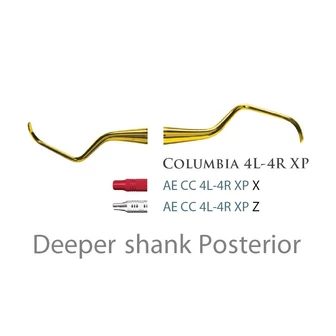
Columbia 13/14 vs. 4R/4LAt first glance, the Columbia 13/14 and the 4R/4L may appear nearly identical—like fraternal twins. Both are universal curettes, both can be used supra- and subgingivally. But closer inspection reveals design differences that impact their use. |
|||||||||
Columbia 13/14 |
|||||||||

|
|||||||||
|
|||||||||
4R/4L |
|||||||||

|
|||||||||
|
|||||||||
|
|||||||||
Final ThoughtsBoth instruments are highly effective, but their design differences make each shine in specific situations. The Columbia 13/14 offers versatility and precision in tight spaces, while the 4R/4L provides power and access in deeper posterior pockets. As with any tool, the key is keeping an open mind. By continuing to learn about evolving instruments and experimenting with different designs, clinicians can expand their skills, improve ergonomics, and deliver even better care. Stay tuned for our continuing education courses—both on-demand and live—where we dive deeper into instrumentation and help you discover new perspectives (and maybe even new favorites). |
|||||||||

|
Tracee S. Dahm, BSDH, MSTracee S. Dahm, BSDH, MS, is a clinical educator for Young Innovations. She is also an adjunct clinical instructor for the North Idaho College School of Dental Hygiene. Dahm has been published in dental journals, magazines, webinars, textbooks, and podcast! Her research interests include trends in dental hygiene, improving access to dental care for the underserved, and mental health. |
||||||||
References:
- Gehrig J.S., Sroda R., Saccuzzo, D. Fundamentals of periodontal instrumentation and advanced root instrumentation. Wolters Kluwer. 2017. 8th edition. Module 17.
- Professor Norrell: Use of Columbia 13/14 Universal Curette. YouTube videos. https://www.bing.com/videos/riverview/relatedvideo?q=video%20for%204r%204l%20dental%20hygiene%20instruments%20video&view=riverview&mid=22A8E6B8CC23DE5B945B22A8E6B8CC23DE5B945B&ajaxhist=0
- Professor Norrell: Use of 4R/4L Universal Curette. YouTube videos. https://www.bing.com/videos/riverview/relatedvideo?q=video+for+4r+4l+dental+hygiene+instruments+video&&view=riverview&mmscn=mtsc&mid=E96DFAE5D94D21F31495E96DFAE5D94D21F31495&&aps=0&FORM=VMSOVR
- American Eagle. 2025. https://www.am-eagle.de/en/